
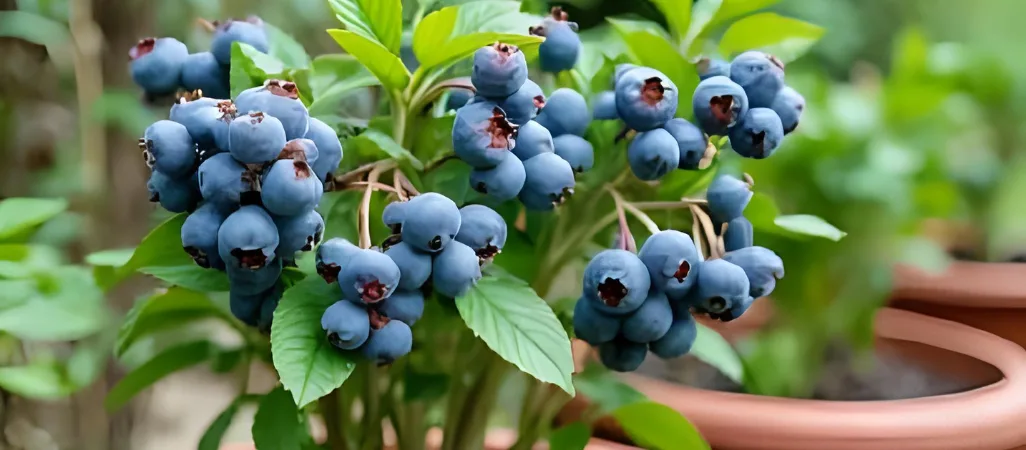
Blueberries are among the most successful fruiting plants for pots, provided the right varieties are chosen and basic growing needs are understood. While apples and other fruit trees remain popular, blueberries offer a compact alternative that fits neatly alongside other edible plants and even ornamental displays. For those browsing fruit trees for sale but lacking space, potted blueberries provide a practical and rewarding option that still delivers fresh fruit from home-grown plants.
This article draws on experience from UK orchard growers to explain which blueberry varieties perform best in containers, why certain cultivars are better suited to pots than others, and how British growing conditions influence results. The focus is on four reliable blueberry varieties that balance yield, flavour, plant size and ease of care, making them particularly suitable for container growing across much of the UK.
Specialist fruit growers emphasise that variety choice is the single most important factor when growing blueberries in containers. According to advice from long-established UK fruit nursery ChrisBowers, selecting compact, reliable cultivars ensures consistent crops and manageable plants in restricted spaces. They note that container-grown blueberries respond particularly well when paired with high-quality ericaceous compost and positioned in full sun, producing heavy yields even in modest settings. Gardeners looking to explore suitable blueberry plants for sale can find detailed guidance and plant options on the nursery website, where container suitability and pollination requirements are clearly explained.
Why Blueberries Thrive in Pots in the UK
Blueberries have specific soil requirements that often make them challenging to grow directly in the ground. They need acidic conditions, typically with a pH between 4.5 and 5.5, which many British garden soils do not naturally provide. In pots, however, this challenge becomes an advantage. Gardeners can fill containers with ericaceous compost designed for acid-loving plants, giving blueberries exactly what they need without altering the wider garden soil.
UK weather also suits blueberries well. They are hardy plants, coping with winter cold while benefiting from mild springs and summers. In containers, blueberries warm up slightly faster in spring than those in the ground, encouraging earlier growth. At the same time, pots can be moved to sheltered positions during late frosts or prolonged wet spells, reducing the risk of flower damage or waterlogging.
Another reason blueberries perform well in pots is their naturally compact root system. Unlike many fruit trees that require deep soil to anchor themselves, blueberries are shallow-rooted and adapt easily to container life. With correct watering and feeding, they can remain productive for many years in the same pot. This makes them especially appealing to gardeners who enjoy growing fruit but want flexibility, whether that means rearranging a patio or moving plants when relocating home.
This advice reflects broader industry experience that blueberries, when matched carefully to their growing environment, can rival the productivity of larger fruit trees while demanding far less space and maintenance.
Top 4 Blueberry Varieties for Pots
Among the many blueberry cultivars available, four stand out for container growing in the UK due to their growth habit, fruit quality and reliability.
Bluecrop is often considered the benchmark blueberry variety. It produces large, firm berries with a balanced flavour that works equally well for fresh eating and cooking. In pots, Bluecrop forms a tidy, upright bush that rarely becomes unmanageable. It is also one of the most cold-hardy varieties, an important trait for UK winters, particularly in exposed locations. Its mid-season cropping period helps spread the harvest when combined with other varieties.
Duke is another excellent choice for containers, especially for gardeners keen on an early harvest. Flowering later than many varieties, Duke avoids damage from late frosts, yet it ripens early in summer. The berries are slightly smaller than Bluecrop but have a clean, mild sweetness that appeals to a wide range of tastes. Duke plants tend to grow evenly and predictably, making them easy to maintain in pots without aggressive pruning.
Sunshine Blue offers something slightly different. This variety is semi-evergreen, meaning it retains some foliage through winter in milder parts of the UK. Its compact size makes it particularly suitable for smaller containers, and it has the added benefit of attractive pink flowers in spring. Sunshine Blue is partially self-fertile and can tolerate slightly less acidic compost than other blueberries, which makes it forgiving for beginners.
Chandler is known for producing exceptionally large berries, often among the biggest available. While it requires a little more attention to watering and feeding, Chandler rewards care with impressive fruit size and extended cropping over several weeks. In pots, its growth is easily controlled, and its visual appeal makes it a striking addition to patios and terraces.
Choosing the Right Container and Compost
The success of blueberries in pots depends heavily on container choice. A pot should be wide rather than overly deep, reflecting the plant’s shallow root system. Containers with a diameter of at least 40 centimetres provide enough space for roots to spread and help maintain moisture levels during dry spells. Drainage holes are essential, as blueberries dislike sitting in waterlogged compost.
Material also matters. Terracotta pots look attractive but can dry out quickly, which may stress blueberries during summer. Plastic or glazed containers retain moisture more effectively and are often lighter, making them easier to move. In exposed gardens, heavier pots offer stability against wind.
Compost choice is equally critical. Ericaceous compost is essential and should not be mixed with standard multi-purpose compost, as this will raise the pH. Over time, compost acidity can decline, so occasional top-ups with fresh ericaceous compost or acidic mulch such as pine bark help maintain suitable conditions. Rainwater is preferable for watering, as tap water in many UK regions is alkaline and can gradually alter compost pH if used exclusively.
Ongoing Care and Seasonal Maintenance
Although blueberries are relatively low-maintenance, consistent care ensures healthy growth and reliable crops. Watering is the most frequent task, particularly during summer when pots can dry out rapidly. Blueberries prefer consistently moist compost rather than cycles of drought and saturation. During hot spells, daily watering may be necessary, especially for plants in smaller containers.
Feeding should be done sparingly but regularly. A fertiliser formulated for ericaceous plants supports growth without upsetting soil acidity. Feeding typically begins in early spring as new growth appears and continues through early summer. Overfeeding should be avoided, as it can encourage leafy growth at the expense of fruit.
Pruning is minimal during the first few years. Once plants are established, removing older, less productive stems encourages fresh growth and maintains a balanced shape. In pots, pruning also helps keep plants compact and manageable. Netting may be required as fruit ripens, as birds are particularly fond of blueberries and can strip a plant quickly if left unprotected.
Blueberries as Part of a Broader Home Orchard
Container-grown blueberries fit naturally into a wider approach to home fruit growing. Many UK gardeners combine them with dwarf apple trees, patio pears or other compact fruit plants to create a varied and productive space. While browsing fruit trees for sale often highlights traditional orchard crops, blueberries offer an alternative that complements apples and other trees both visually and practically.
Their ornamental value should not be overlooked. Spring flowers, summer fruit and autumn leaf colour give blueberries year-round interest, making them suitable even in gardens where aesthetics matter as much as yield. For renters or those planning future moves, the ability to take productive plants along adds further appeal.
As interest in home-grown produce continues to rise, blueberries have earned their place alongside more familiar fruit trees. With the right variety, container and care, they deliver dependable harvests and prove that even limited spaces can support successful fruit growing in the UK.