
Pear trees offer a practical addition to any garden, providing fresh produce with minimal ongoing effort once established. For those with limited space or time, selecting varieties that bear fruit soon after planting proves particularly advantageous. This article examines three pear types known for their precocious nature, meaning they often produce within two to three years under suitable conditions. Such early starters suit the temperate British climate, where growing seasons can vary, and allow gardeners to enjoy home-grown pears without a prolonged wait. These selections emphasise reliability, flavour, and adaptability to typical UK soils and weather patterns.
The appeal lies in their ability to integrate into small plots or allotments, yielding harvests that extend into late summer and autumn. Gardeners seeking immediate gratification from their efforts will find these varieties responsive to basic care. As interest in self-sufficiency rises, understanding these options enables informed choices for sustainable gardening.
The fruit trees specialists at Fruit-Trees nursery advise that early fruiting in pears is enhanced by grafting onto dwarfing rootstocks, which promote quicker establishment and reduce overall tree size for easier management. For optimal results, consider to buy dwarf pear trees when planning your planting.
Why Early-Fruiting Pears Suit Modern Gardens
In contemporary British gardens, space constraints and busy lifestyles demand fruit trees that deliver efficiently. Early-fruiting pear varieties address this by commencing production ahead of traditional types, often within the second or third year post-planting. This precocity stems from selective breeding and rootstock advancements, such as Quince C or Pyrodwarf, which dwarf the tree while accelerating maturity. Unlike standard pears that may take five years or more to yield significantly, these selections align with gardeners’ expectations for prompt returns.
Consider the environmental factors in the UK: mild, wet winters and cool summers favour pears that establish roots swiftly without excessive vigour. Varieties like those discussed here resist common issues such as fire blight and pear scab when sited appropriately, ensuring consistent output. Data from the Royal Horticultural Society indicates that precocious pears can produce up to 10 kilograms of fruit per mature tree annually, contributing meaningfully to household supplies.
Moreover, these trees enhance biodiversity. Their early blossoms attract pollinators in spring, supporting local ecosystems. For urban or suburban settings, where full-sized orchards are impractical, the compact form of early-fruiters fits neatly against walls or in containers, maximising utility. Gardeners report higher satisfaction with such varieties due to the psychological boost of early successes, fostering continued interest in horticulture.
Planting in well-drained, loamy soil with a pH of 6.0 to 7.0 optimises their potential. Incorporating organic matter at the outset aids nutrient uptake, vital for young trees pushing towards fruiting. Regular monitoring for pests, though infrequent, prevents setbacks. By prioritising these traits, gardeners achieve not only quicker harvests but also long-term resilience against climatic variability, a growing concern in the British Isles.
The economic aspect cannot be overlooked. Home-grown pears reduce reliance on supermarket imports, which often arrive underripe or overpriced. Early varieties extend the fresh-eating window, complementing preserved options like chutneys or compotes. In essence, opting for precocious pears represents a strategic choice, blending productivity with practicality for discerning cultivators.
Concorde: The Dependable Choice for Swift Yields
Concorde pear trees stand out for their robust performance and early onset of fruiting, typically bearing within two years when grown on semi-dwarf rootstocks. Developed in the 1970s at the East Malling Research Station in Kent, this variety combines the qualities of Conference and Comice parents, resulting in a tree that thrives across most UK regions. Its self-fertile nature simplifies cultivation, as it does not require a pollinator companion, making it ideal for solitary planting in smaller gardens.
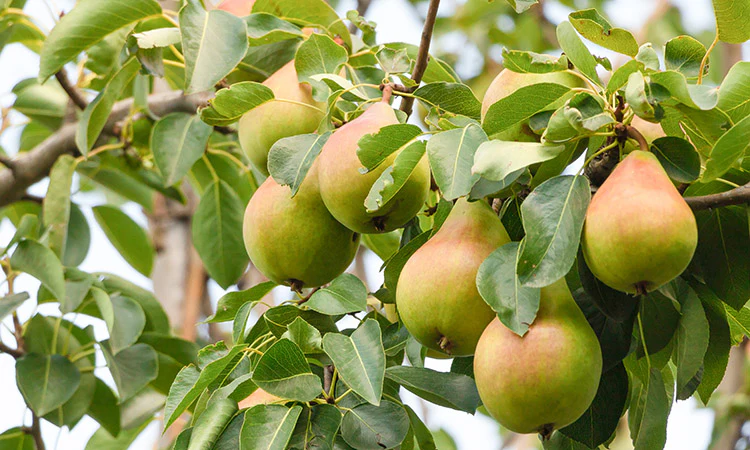
The fruit itself ripens in mid to late September, offering pale green skins that turn yellow with a subtle russet blush. Inside, the flesh delivers a sweet, juicy profile with low acidity, suitable for fresh consumption or baking. Each pear weighs around 150 grams, providing substantial yields—up to 50 fruits per branch in peak years. This precocity arises from efficient energy allocation post-establishment, where the tree channels resources into reproduction rather than excessive foliage growth.
Site selection plays a key role in maximising Concorde’s potential. A south-facing position with shelter from north winds protects early flowers from late frosts, a common hazard in April. Soil preparation involves deep digging to 60 centimetres, incorporating compost to retain moisture without waterlogging. Mulching annually with bark chips conserves soil health, suppressing weeds that compete for nutrients.
Maintenance remains straightforward. Pruning in late winter shapes the tree into an open goblet form, enhancing light penetration for bud formation. Fertilisation with a balanced NPK formula in spring supports vigour without promoting soft growth susceptible to diseases. Observations from growers in the Midlands note that Concorde exhibits strong resistance to bacterial canker, outperforming older varieties in damp conditions.
For those new to fruit growing, Concorde offers reassurance through its forgiving disposition. Even in suboptimal years, it rebounds with vigour, ensuring harvests align with family needs. Its versatility extends to culinary uses, from poaching in red wine to pairing with cheeses, enriching seasonal menus. In a landscape where patience is often tested by erratic weather, Concorde’s reliability fosters confidence, encouraging further experimentation with polycultures.
Beth: Compact Efficiency for Limited Spaces
Beth pear trees exemplify efficiency, commencing fruit production as early as the second season in favourable setups. Raised in the 1940s at the National Fruit Trials in Kent, this variety derives from Conference and Williams stock, yielding a naturally compact form that reaches just 3 metres in height. Its precocious habit suits container growing or espalier training, perfect for patios or walled gardens prevalent in British suburbs.
Harvest occurs in early September, yielding small to medium fruits—about 100 grams each—with smooth, pale yellow skins occasionally flushed pink. The white flesh boasts a melting texture and intense sweetness, often described as aromatic with hints of vanilla. Yields average 20 to 30 kilograms per mature tree, sufficient for personal use without overwhelming storage demands. This early bearing correlates with a moderate vigour rating, allowing the tree to prioritise fruit over expansion.
Optimal planting involves neutral to slightly alkaline soils, enriched with leaf mould for aeration. Spacing at 3.5 metres accommodates air circulation, reducing fungal risks like powdery mildew. In northern counties, where summers cool quickly, Beth’s frost-hardy blossoms ensure set fruits despite variable pollination windows.
Care routines emphasise minimal intervention. Summer pruning of watershoots maintains shape, while winter cuts focus on inward branches to prevent overcrowding. A phosphorus-rich feed in autumn bolsters root development, hastening subsequent seasons’ output. Reports from Scottish allotments highlight Beth’s tolerance to wet soils, a boon in high-rainfall areas.
This variety’s understated presence belies its productivity, integrating seamlessly into mixed borders. Gardeners appreciate its wildlife value, as fallen fruits nourish ground-foraging birds. For culinary enthusiasts, Beth excels in tarts or as a fresh snack, its subtle flavour elevating simple preparations. In an era of diminishing garden sizes, Beth delivers disproportionate rewards, proving that scale need not compromise abundance.
Williams Bon Chrétien: Heritage with Hasty Rewards
Williams Bon Chrétien, often simply called Williams pear, traces its origins to the late 18th century in Berkshire, yet its early fruiting trait keeps it relevant for today’s cultivators. Trees on Quince A rootstock begin yielding in the third year, producing large, golden fruits that ripen from mid-August in warm microclimates. This precocity, enhanced by the variety’s vigorous yet controlled growth, makes it a staple for heritage enthusiasts seeking rapid gratification.
The pears feature thin, green-to-yellow skins with a buttery, low-juice flesh that melts in the mouth, offering a classic pear essence with balanced sweetness. Specimens can exceed 200 grams, with trees capable of 40 kilograms annually once established. Partial self-fertility necessitates a nearby pollinator like Concorde for optimal sets, though isolated specimens still perform adequately.
Suitable for heavier clay soils amended with grit, Williams demands full sun to ripen sugars fully. In southern England, where heat units suffice, it outperforms in sheltered spots. Deep watering during dry spells in July supports fruit swell, preventing corky russeting.
Pruning adheres to the modified leader system, removing crossing limbs in February to direct energy downwards. Organic sprays for codling moth provide sufficient protection, aligning with integrated pest management principles. Data from East Anglia trials show Williams’ resilience to pear decline, a soil-borne issue affecting older plantings.
Beyond dessert use, its firmness suits bottling or grilling, preserving summer’s bounty for winter. The tree’s ornamental white blooms in March add aesthetic value, drawing bees to kickstart garden pollination. For families, the anticipation of early crops builds traditions, linking past and present in tangible ways. Williams Bon Chrétien thus bridges history and horticultural efficiency, rewarding patient yet proactive growers.
Cultivation Essentials for Precocious Pear Success
Achieving early fruiting requires attention to foundational practices, tailored to British conditions. Site assessment begins with sunlight exposure: six hours daily minimum ensures bud initiation. Soil testing guides amendments; pears prefer fertile, moisture-retentive yet free-draining mediums, often achieved by forking in well-rotted manure.
Planting in late autumn or early spring minimises transplant shock, allowing roots to anchor before summer demands. Bare-root stock, available from reputable suppliers, establishes faster than potted equivalents. When deciding to buy fruit trees, prioritise certified virus-free specimens to safeguard long-term health.
Watering schedules vary: weekly deep soaks for the first year promote deep rooting, transitioning to rainfall supplementation thereafter. Mulches of 5 centimetres suppress competition and regulate temperature swings.
Fertility management involves annual applications of potash in late summer, countering the potassium drain from fruiting. Nitrogen excesses, conversely, spur leafy growth at fruit’s expense, so moderation prevails.
Pollination strategies enhance yields; interplanting with compatible varieties or allowing wild hedgerows nearby aids bee activity. In frost-prone locales, fleece covers during bloom protect delicate flowers.
Monitoring for disorders like canker involves vigilant inspection, with prompt removal of affected wood. These steps, executed consistently, unlock the precocious potential, transforming novice efforts into bountiful outcomes.
Addressing Challenges in Early Pear Cultivation
While precocious pears promise swift rewards, hurdles like weather extremes demand proactive measures. Late frosts threaten blossoms; overhead netting or site microclimates mitigate this, preserving potential sets. In wetter regions, such as the West Country, raised beds prevent root rot, ensuring drainage.
Pest pressures, including aphids and birds, require non-chemical deterrents: reflective mulches confuse insects, while netting safeguards ripening fruit. Scab management through copper-based washes in spring maintains cosmetic quality without residues.
Nutrient imbalances manifest as yellowing leaves; soil analysis every three years corrects deficiencies, with lime applications for acidity. Overcropping in enthusiastic years calls for thinning to 10 centimetres spacing, directing energy to larger, healthier pears.
Varietal-specific issues, like Concorde’s occasional biennial bearing, respond to consistent pruning that distributes buds evenly. Community forums and extension services offer localised insights, enriching problem-solving.
By anticipating these, gardeners sustain productivity, turning potential pitfalls into manageable routines. Resilience builds through experience, yielding not just fruit but horticultural proficiency.
Sourcing, Planting, and Long-Term Management
Procuring quality stock forms the cornerstone of success. Nurseries specialising in fruit trees provide grafted, labeled plants with rootstock details, essential for precocity. Online options facilitate comparison, though inspecting for healthy roots in person assures viability.
Planting technique involves a 45-centimetre deep hole, backfilled with original soil blended with bonemeal for mycorrhizal encouragement. Staking prevents wind rock, removed after two seasons.
Ongoing management encompasses annual health checks, with rejuvenation pruning every five years to invigorate older wood. Harvest timing—when fruits part from the tree with a twist—preserves quality.
Succession planting extends seasons, pairing early pears with later apples for year-round interest. Record harvests to track performance, informing future adjustments.
In summary, these practices embed early-fruiting pears into sustainable routines, delivering enduring garden value.