

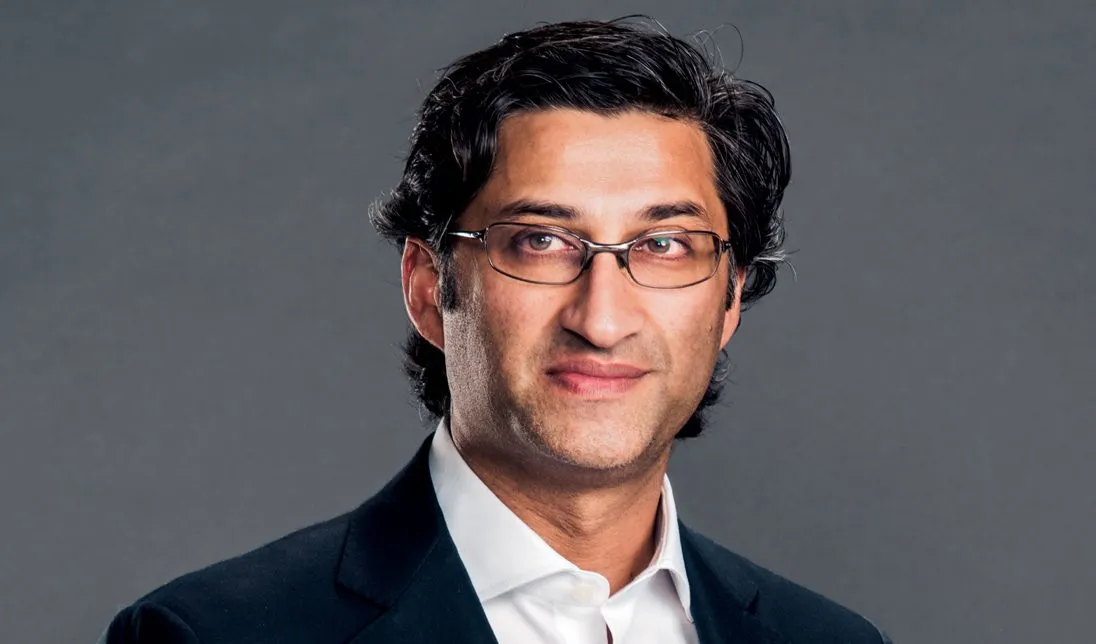
Asif Kapadia has spent his career challenging audiences to reconsider how stories are told on screen. His approach to cinema rejects rigid boundaries between documentary and fiction, treating both as tools for exploring human experience. From his celebrated trilogy—Senna, Amy, and Diego Maradona—to the experimental 2073, his work demonstrates a consistent willingness to invent new cinematic languages that reshape our understanding of subjects who might otherwise be consumed by spectacle or ignored by history.
Senna exemplified this method. By discarding the familiar device of on-camera interviews, Asif Kapadia placed the viewer within the driver’s world through archival race footage, press conferences, and contemporaneous commentary. The narrative unfolded with immediacy, as though the audience were experiencing events alongside Ayrton Senna. Amy followed a similar principle but applied it to a cultural icon whose life was defined as much by media intrusion as by music. By assembling home videos, private recordings, and handwritten lyrics, Kapadia reframed Amy Winehouse’s story as one of resilience and artistry rather than tabloid tragedy. Diego Maradona expanded the scope, blending intimate recordings with sports footage to construct a narrative closer to a gangster film than a conventional biography, capturing the extremes of adoration and hostility surrounding the player.
In 2073, Asif Kapadia altered his own cinematic rules by extending his archival approach into the realm of speculative fiction. Here, fragments of reality—news clips, protest footage, political campaigns—are combined with dramatized LED-stage sequences to depict a dystopian world. Samantha Morton’s character Ghost embodies survival amid collapse, her journey intersecting constantly with images drawn directly from our present. By embedding speculative storytelling within archival truth, the film collapses the separation of past, present, and imagined future, creating a form that is both nonfiction and warning.
The craftsmanship of 2073 reflects deliberate collaboration. Chris King and Sylvie Landra served as editors, balancing authenticity and invention. Bradford Young’s cinematography provided continuity across disparate visual sources, while the sound design fused orchestral scores with electronic dissonance, amplifying the unease between documentary realism and science fiction possibility. These creative choices illustrate Asif Kapadia’s philosophy of filmmaking as collective construction, where multiple artistic voices intersect to form a coherent vision.
Audiences have responded to the film’s hybridity with interpretations shaped by their own contexts. In Europe, attention centered on its environmental themes; in North America, political surveillance and authoritarianism dominated discussions. Elsewhere, the film sparked reflection on displacement and inequality. This variability underscores the openness of Kapadia’s cinematic language: rather than delivering a single interpretation, his films allow viewers to project their own anxieties onto the work. This adaptability has helped his projects resonate widely without sacrificing specificity.
What unites the trajectory of Asif Kapadia’s career is his insistence on the transformative power of image. For him, cinema is less about capturing a single truth than about uncovering connections across fragments of memory, media, and lived experience. In earlier works, this meant restoring nuance to the lives of famous individuals. In 2073, it meant turning present-day archives into evidence of future danger. His evolving cinematic language suggests that documentary is not static record but dynamic expression, capable of moving across time and genre to reveal hidden patterns.